


Fiber-seq is a multiomic long-read sequencing (LRS) assay that simultaneously profiles chromatin accessibility, DNA methylation, protein footprints and genetic variants at single-molecule resolution.

Long-read sequencing is redefining how researchers study the epigenome by directly capturing genetic and epigenetic features from individual DNA molecules. Unlike short-read methods, LRS can resolve chromatin features genome-wide, including highly repetitive and structurally complex genomic regions, while also enabling haplotype phasing.
Fiber-seq enables researchers to investigate chromatin accessibility, DNA methylation, protein-DNA footprints, genetic variants, haplotype-specific regulation and complex genomic regions from individual DNA molecules.
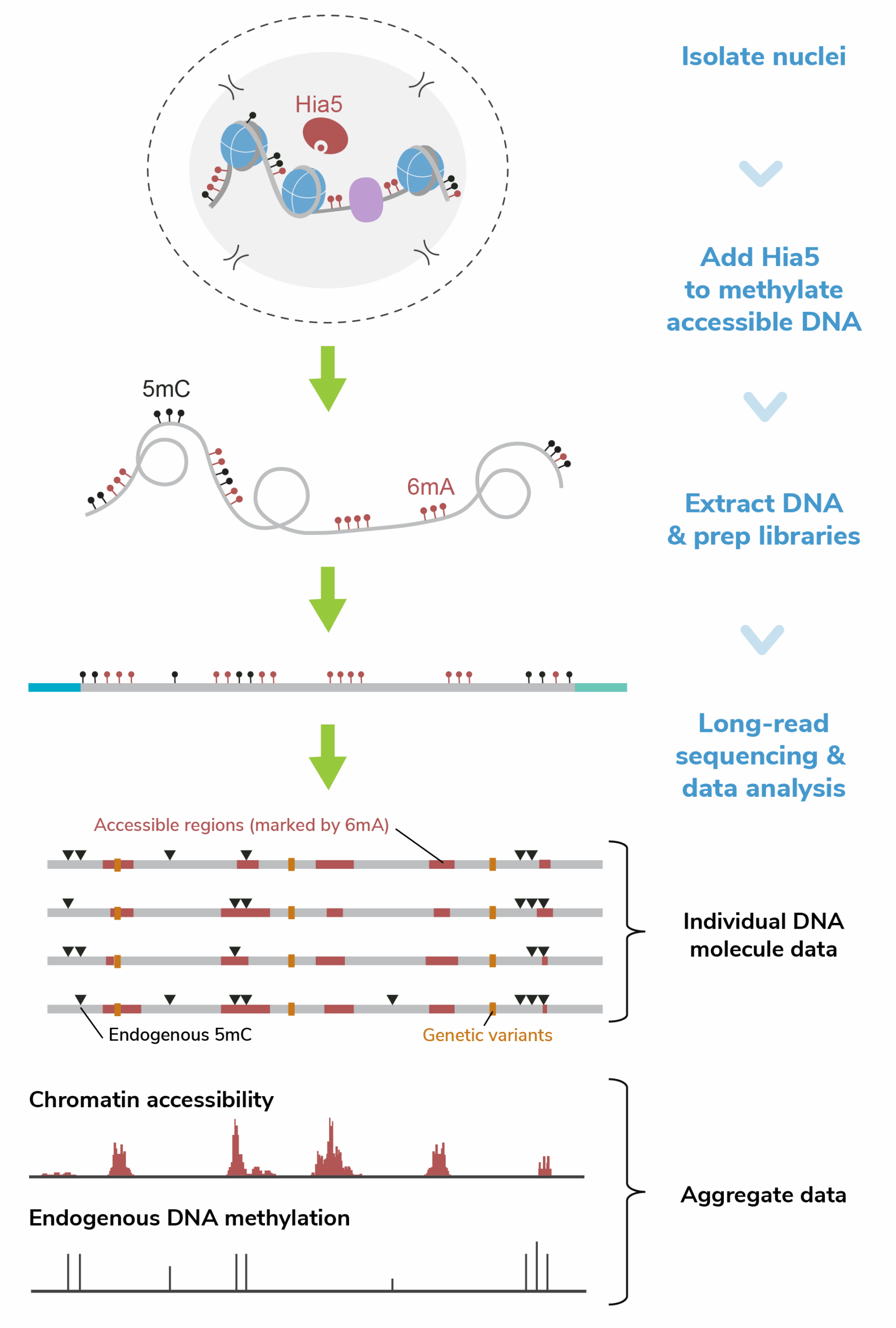
In the Fiber-seq workflow, isolated nuclei are incubated with CUTANA™ Hia5, an N6-methyladenine methyltransferase (6mA MTase) that selectively methylates adenines within regions of accessible chromatin. After a brief 10 minute labeling step, the reaction is quenched and genomic DNA (gDNA) is purified and prepared for sequencing with direct or native DNA sequencing protocols using either Pacific Biosciences® (PacBio®) HiFi or Oxford Nanopore Technologies® (ONT) Nanopore sequencing platforms. Both long-read sequencing platforms deliver information on 6mA labeling (accessible regions) and endogenous DNA methylation (5mC).


Follow us